
Best Pet Ear Cleaning Solution for Dogs and Cats
There's more to choosing the right ear care items than just looking through ads. The best Pet Ear Cleaning Solution for your business is one that is safe, follows all the rules, and has a reliable supply chain. If you work as a B2B buyer or wholesaler for veterinary clinics, grooming shops, retail chains, or e-commerce platforms, the products you choose have a direct effect on how happy your customers are, how likely they are to buy from you again, and how well-known your brand is. This guide shows you the most important things to think about when looking for effective ear cleaning products that meet both medical standards and the needs of end users in the United States.
Understanding Pet Ear Anatomy and Cleaning Essentials
Why Ear Anatomy Matters for Product Selection
The ear tubes of dogs and cats are shaped like an L, which makes it easier for them to catch water, wax, and other debris. This special structure makes a place where bacteria, yeast, and mites can grow, especially in dog breeds with floppy ears or a lot of hair growth inside the canal. Poor air flow makes it more likely for Cocker Spaniels, Basset Hounds, and Persian cats to get sick. When buying teams understand this anatomy, they can see why general cleaning methods don't work and why specific recipes are needed for good care.
Evidence-Based Cleaning Frequency and Best Practices
Animal dermatologists say that healthy cats should have their ears cleaned once a week, and types that are more likely to get problems should have their ears cleaned twice a week. If you clean too much, you hurt the thin epithelium lining, and if you clean too little, biofilm can form. Professional groomers clean the ears before and after washing to keep conditions from getting worse in the water. Veterinary offices use pre-treatment baths before an otoscopy or the administration of medicine to make sure that the diagnosis is correct and that the medicine gets to the right spot. These rules show how important it is to have products that are both gentle and successful, and that balance killing microbes with Pet Ear Cleaning Solution protecting tissue.
Comparing Types of Pet Ear Cleaning Solutions
Natural Versus Chemical-Based Formulations
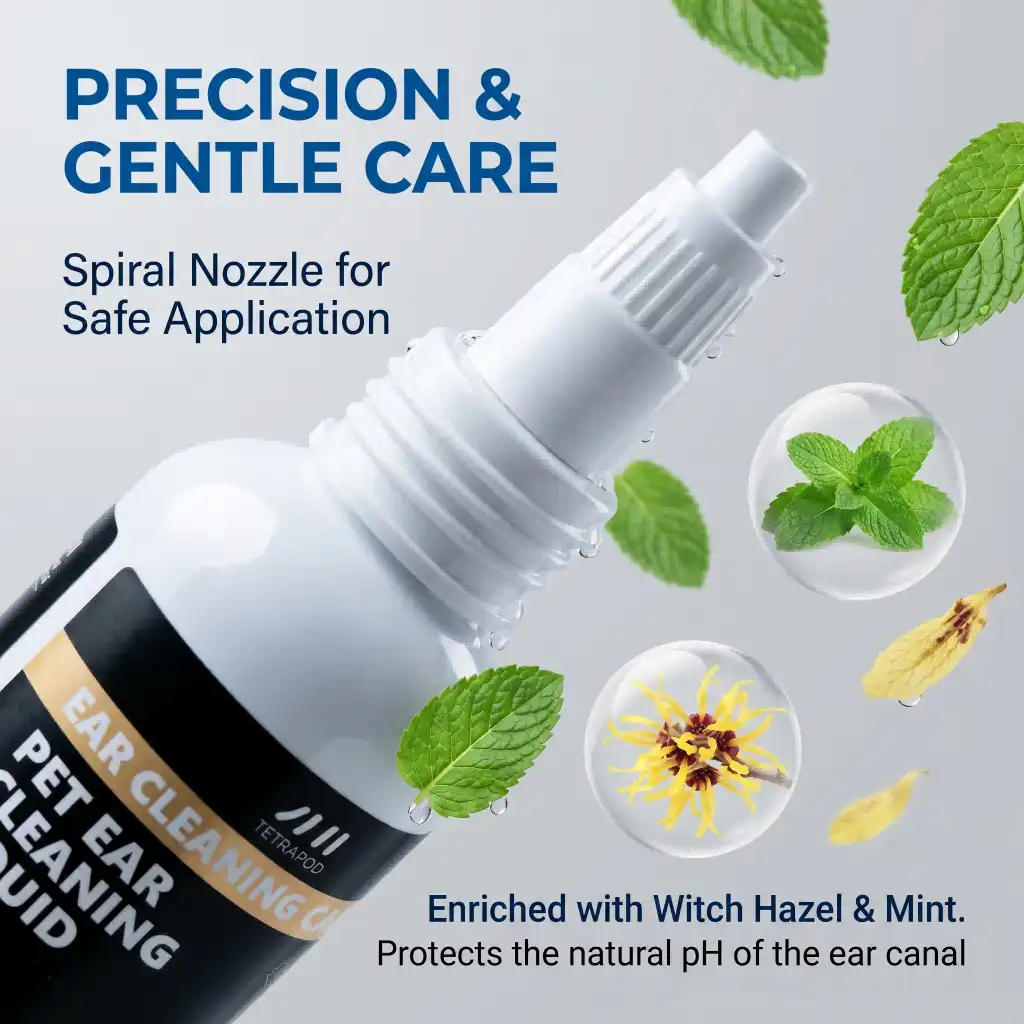
Plant products from things like Witch Hazel, Garlic, and Mint are used in natural treatments because they kill bacteria, fungi, and inflammation. People who care about their health and want to avoid manmade chemicals will like these ingredients. Garlic powder kills germs without causing unpleasant side effects, and witch hazel works as an astringent to reduce swelling. A lot of chemical-based items have salicylic acid or lactic acid in them to change the pH level and create conditions that are not good for bacteria. To protect the ears from damage, high-quality formulas don't contain alcohol or chlorhexidine. This is especially important when the health of the tympanic membrane is unknown. When deciding which of these methods to use, procurement teams should look at the types of clients they have and what they like.
Product Forms: Liquids, Wipes, and Applicators
Liquid treatments are still the standard because they can get deep into the ear canal and reach the part that lies flat, which is where waste builds up. If you use them the right way, they clean better than 99% of the time. Pre-moistened wipes make it easier for pet owners to do light cleaning tasks, but they don't get deep enough into the skin to be helpful. Bottles with precise brush tips make doses more accurate and cut down on waste, which makes grooming shops more efficient because they can handle more pets every day. Bulk packaging forms are best for people who buy a lot, while retail-ready bottles with labels in multiple languages are best for people who buy a wide range of things.
Top-Rated Pet Ear Cleaning Solutions in 2026: Market Leader Analysis
Leading Brands and Their Differentiators
Well-known names like Zymox use lactoperoxidase and lysozyme, which are enzymes, to break down bacterial cell walls without using antibiotics. This gets rid of biofilm resistance. Virbac's Epi-Otic Advanced uses a patented anti-adhesive glycotechnology that stops microbes from sticking to the inside of channel walls. Vet's Best targets the growing health market by combining natural ingredients with formulas that have been approved by veterinarians. Pet Autra is different because it uses plant-based recipes with extracts of Witch Hazel, Garlic, and Mint that are antibacterial, antifungal, and healing, and they smell fruity and clean. Each brand's unique method targets specific market niches, such as those interested in clinical Pet Ear Cleaning Solution effectiveness or natural ingredient tastes.
Packaging Options for B2B Efficiency
Bulk forms, which range from 500ml to 5-liter buckets, lower the cost per unit for people who use a lot, like veterinary hospitals and grooming shops. Businesses that care about the environment will like refill packs because they reduce the amount of packaging waste. Distributors can be sure of steady inventory levels and regular cash flow with subscription plans. Individual store bottles with seals that can't be broken and clear dose instructions help customers trust and follow the directions. Pet Autra has flexible minimum order quantities (MOQs) starting at 500 bottles and a shelf life of 24 months, so it can work for both new businesses trying out new markets and established wholesalers who need to buy in bulk.
How to Choose the Best Pet Ear Cleaning Solution for Your Business
Essential Procurement Criteria
Product safety is the most important thing to think about, so formulas must not contain any ototoxic ingredients or strong alcohols that hurt the cochlea. Veterinary recommendations from board-certified doctors and publicly available clinical data are objective ways to measure quality. Regulatory compliance includes getting FDA approval for sales in the US, CE approval for sales in Europe, and MSDS paperwork to show that chemicals are safe. Supplier dependability includes stable sources of raw materials, uniform quality control, and helpful customer service. For prices to be competitive, they need to strike a mix between quality and price, staying away from cheap options that don't work as well and cause more returns.
Supply Chain Considerations and Value-Added Services
How well logistics work affects both profits and customer happiness. Suppliers who offer more than one sending way, like air freight, sea freight, and express service, give you options for both quick restocks and big orders. Popular SKUs can be shipped within 24 to 48 hours if standard recipes are kept in stock, but special orders take 7 to 15 days to be made. Getting competitive shipping rates through established partnerships with carriers lowers the cost of land. Tracking tools that work in real time make the whole transport process clear. Pet Autra ships to Asia, Europe, the Americas, Africa, and the Middle East. Their professional export-grade packing protects the quality of their products and makes it easy for customs officials to clear them.
Implementing Effective Ear Care Programs with Your Supply
Staff Training and Educational Resources
For a product to be widely used, users must be fully trained on how to use it correctly. The staff needs to know the drop-massage-wipe method for cleaning that gets the job done best while keeping pets comfortable. Educational tools like educational films, written guides with anatomical pictures, and best-practice checklists make sure that everyone on the team follows the same steps. For example, if your pet's eardrums are damaged, you should learn about safety rules for pets that are easily scared and how to spot signs of bad reactions that need to be checked out by a vet. These tools cut down on application mistakes, boost client trust, and lower the risk of liability.
Strategic Marketing for B2B Channels
Putting ear cleaning products in holistic health programs makes them seem more valuable. Case studies that Pet Ear Cleaning Solution show lower illness rates, lower costs from preventive care, and more satisfied clients are very convincing for vets and groomers. Testimonials from people in the same business that you work with add social proof and trustworthiness. Samples of a product let people who might buy it decide if it works and is of good quality before they commit to big sales. Distributor logos on collaborative marketing products make ties stronger and make advertising easier. Pet Autra helps its partners by providing labels in multiple languages, legal information, and market-specific advice.
Feedback Loops and Continuous Improvement
Collecting usage data and customer comments helps improve products and make relationships stronger. Formula changes are based on surveys that ask about how well the cleaner works, how easy it is to use, and what scents people like best. Return rate research finds problems with quality or unmet needs that need to be fixed. New trends and competition information can be found by keeping in touch with key accounts on a regular basis. This repeated process keeps product lines in line with what customers want, which encourages trust and long-term growth. Suppliers who want to work with you for a long time put an emphasis on being open, quick, and working together to solve problems.
Conclusion

It's important to find the right balance between clinical effectiveness, safety, regulatory compliance, and operating efficiency when picking the best Pet Ear Cleaning Solution and other ear care goods for your business. Procurement pros can make smart choices when they compare recipe types, understand the anatomy of canine and feline ears, and look at market leaders. Veterinary clinics, grooming salons, store chains, and distributors can get the most value by matching goods to customer groups, making supply lines more efficient, and putting in place full ear care programs. Partners can be successful in competitive markets with Pet Autra's plant-based formulations, open customization options, and dependable global shipping. These features also improve the health of pets.
FAQ
1. How often should ear cleaning solutions be used for maintenance?
When it comes to healthy pets, once a week is fine, but twice a week is better for breeds that are more likely to get illnesses. Over-cleaning can hurt the lining of the ear canal, so it's best to follow what the vet says based on your pet's genetics and health history to get the best results without any harm.
2. Are natural plant-based solutions as effective as chemical formulations?
Natural remedies that use Witch Hazel, Garlic, and Mint products work just as well against bacteria and fungi as chemical ones, but they don't have as many bad side effects. Natural solutions based on enzymes break down wax and bacteria effectively while keeping gentle profiles that are safe for pets with sensitive skin.
3. Can the same product be used for both dogs and cats?
There are many formulas that work for both dogs and cats, as long as they keep the pH level right and don't contain any ingredients that are harmful to cats. Always check the labels to make sure the product is safe for cats to use, especially when it comes to essential oils and some plant extracts that could be harmful to cats.
Partner with Pet Autra for Premium Ear Care Solutions
Pet Autra sells ear cleaning products that have been cleared by veterinarians and are trusted by retailers, veterinary clinics, and wholesalers all over the world. Our plant-based mixture with Witch Hazel, Garlic, and Mint extracts cleans over 99% of the time and has a pleasant fruity smell that calms irritation. As a producer of Pet Ear Cleaning Solutions with more than 20 years of experience, we have FDA and CE certifications, run 100,000-class cleanrooms, and offer full OEM/ODM customization, which includes formulas, packing, and private labeling. Our flexible minimum order quantities (MOQs) start at 500 bottles, fast production cycles of 7–15 days, and low-cost shipping around the world make us your go-to provider for Pet Ear Cleaning Solution. You can email our team at sales@shampoopet.com or visit shampoopet.com to get samples, talk about bulk prices, and look into partnership options that will help your business and your customers.
References
1. Miller, W.H., Griffin, C.E., and Campbell, K.L. (2023). Muller and Kirk's Small Animal Dermatology, 8th Edition. Elsevier Health Sciences.
2. Rosychuk, R.A. and Luttgen, P. (2022). "Diseases of the Ear," in Small Animal Internal Medicine, 6th Edition. Mosby.
3. Angus, J.C. (2021). "Otitis Externa and Otitis Media: Diagnosis and Treatment," Veterinary Clinics of North America: Small Animal Practice, 51(1): 19-32.
4. Cole, L.K. (2020). "Anatomy and Physiology of the Canine Ear," Veterinary Dermatology, 30(5): 412-421.
5. Paterson, S. (2019). "Topical Ear Treatment: Options, Indications, and Limitations," Journal of Small Animal Practice, 60(4): 203-215.
6. National Animal Supplement Council (2023). Quality Standards for Pet Hygiene Products: Guidelines for Manufacturers and Distributors. NASC Publications.

Send Inquiry
You may like